Bali Hai

The cotton wool clouds, the fine grains of black volcanic sands, the clean sea waters - one can just lie on the beach and while the time away with a tan beneath the balmy tropical sun...

The Volcanic Islets Of Onuma

Ōnuma Park is known for its picturesque, island dotted lakes and majestic dormant volcano, Mount Komagatake. Surrounded by birch and maple forests, a total of 128 small islands can be found in its lakes...

A Journey Over Mountains & Waters

A land of rocky mountains, snaking rivers, steep slopes, deep valleys, and harsh barren terrain. Yet in some places, lush greenery and crystal-clear azure waters abound...

The Bluest Pacific Seas

In the middle of the Pacific Oceans lies an archipelago of islands formed from the fiercest violent volcanoes and made of the browns and greys of cooled lava rocks. The resulting landscape is breathtaking in its purest greens and blues...

Sounkyo's Silver Streams

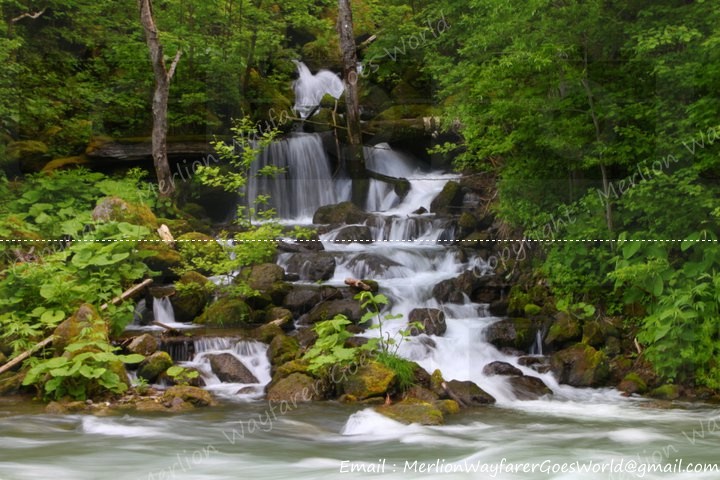
Bordered by 100-metre cliffs formed by the erosion of tuff, Sounkyo Gorge is situated at the foot of Mount Daisetsuzan - the "roof of Hokkaido", and stretches for 24 kilometres along the Ishikari River...

Showing posts with label Singapore. Show all posts

Hawker Culture By Maybank - Tradition Through The Generations

Hawker Culture by Maybank is the first of a series of regional culinary events showcasing the best of each country’s hawker cuisine. The inaugural edition held in Singapore features specially-curated signature hawker dishes by 12 hawkers from both Singapore and Malaysia, from 05 October to 06 October 2019.


This year’s culinary display is centred around the heartwarming stories of family and tradition behind each dish that the hawkers presented. Hawker Culture by Maybank not only evokes the convivial atmosphere of our beloved street food culture, but also pays tribute to family and heritage - the passing on of time-honoured culinary traditions from one generation to the next.


Dine amongst replicas of heritage shophouses and be transported back through time to a scene from yesteryear, where hawkers plied the streets and customers from all walks of life gathered for affordable bowls of hawker delights...


Kaw Kaw Burger (Kuala Lumpur)

What began as a little street stall in the residential Wangsa Maju district has become wildly popular in burger-loving circles, with waiting times purportedly stretching to 3 hours. Fans obsess over their homemade patties and sauces, of which they will be presenting their take on the chicken Ramly burger and Kaw Kaw’s first ever Impossible Burger.


Kwong Wah Cendol (Petaling Jaya)


These third-generation hawkers have taken over a business which has been in the family since 1958. Almost everything, even the ice, is made inhouse. They will even be bringing their secret blend of gula melaka to Singapore for Hawker Culture.


(Photo Source : Maybank)

Nasi Lemak Ong (Alor Setar) 


(Photo Source : Maybank)

Not your regular nasi lemak, this rendition resembles what is more commonly known as nasi kandar. Hailing from Alor Setar, Uncle Ong’s journey first started as a passion for curries over 35 years ago, when he learned how to make curries from his Indian friends.


His legacy has now passed on to his son, who has expanded to the restaurant in Kuala Lumpur. He will be dishing up fried chicken on a bed of his signature nasi kunyit, infused with fragrant ginger.

(Photo Source : Maybank)

Roasted Chef House (Subang) 


(Photo Source : Maybank)

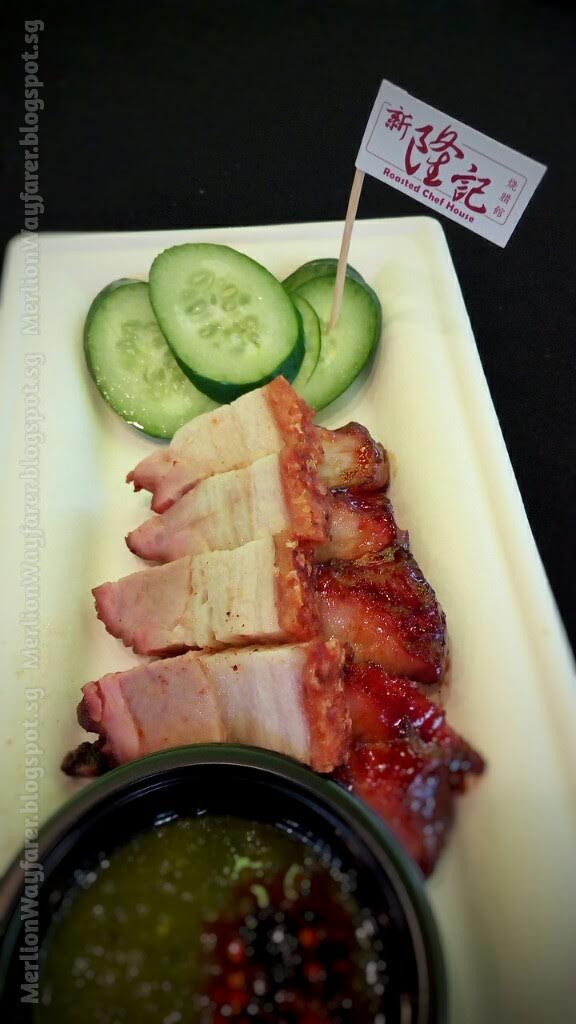
Famed for their roast meats, the other star of Roasted Chef House is their signature sauce blend of green chilli and other secret ingredients, which perfectly complements and cuts through the unctuousness of their char siew and siew yok.


Robert’s Char Kway Teow (Petaling Jaya)

Uncle Robert has been dancing behind the wok for 35 years, churning out plate after plate of hearty, intensely flavourful char kway teow in what’s closer to the Penang style than the dark dish Singaporeans are used to. Full of wok hei and laden with slivers of preserved Chinese sausage and prawns, and topped with a sunny side-up egg, this is a plate not to be missed.


Samy & Min Bak Kut Teh (Kuala Lumpur)

With over 25 years of bak kut teh braising under their belts, Samy & Min will be presenting their aromatic, herbal rendition of this hawker classic with tender, fall-off-the-bone ribs and melting pork belly, paired with a dip of chopped fresh garlic and chilli padi in light soya sauce for an extra punch.


(Photo Source : Maybank)

Fu Zhou Poh Hwa Oyster Cake (Singapore)


Oyster cakes are fast disappearing from Singapore’s food scene, and Fu Zhou Poh Hwa is one of the last hawkers selling this traditional delight. Having helped her grandmother sell oyster cakes for over 20 years, Jenny decided to open her own stall in 1986 in honour of her late grandmother.


(Photo Source : Maybank)

Hawker Chan (Singapore)

The cheapest Michelin-starred meal in the world since 2016, Hawker Chan’s succulent soya sauce chicken and lightly herbal gravy need no further introduction. Assisting in his family’s kitchen from a young age sparked Chef Chan’s passion for cooking, and today this is evident in the throngs of hungry crowds that flock to his local and regional outlets as well as pop-ups around the world.


(Photo Source : Maybank)

Haig Road Putu Piring (Singapore)

If they weren’t famous enough, being featured on Netflix’s Street Food has further propelled this family-owned business to fame. In staying true to tradition, their steamed rice cakes are still made by hand, filled with luscious gula melaka and topped with freshly-shredded coconut.

Pandan Gardens Fishball Noodles (Singapore)


Founded in 1982, this stall has now been taken over by a new generation of enterprising young folk who have expanded their parents' humble business into three more outlets. Known for their springy yet firm fishballs, their offerings for Hawker Culture include their namesake fishball mee pok and utterly rich laksa.


(Photo Source : Maybank)

Tuan Yuan Bak Kut Teh (Singapore)


Tuan Yuan was born of a father’s tough love towards his children, who decided that they should not ride on the coat-tails of famed Ya Hua Bak Kut Teh, his own bak kut teh establishment. This new-gen bak kut teh is cooked in the Teochew style with a sharp, peppery bite owing to the hours-long process of boiling pork bones with old garlic and specially-imported Sarawak white pepper.

(Photo Source : Maybank)

Rong Guang BBQ

The second-generation Botak Joe took over the reins of his family’s business in 2000, and made a name for barbecued seafood. Their signature rendition of stingray is barbecued with an exclusive sambal which is like no other.

Drinks


The drinks stall will feature traditional hand-pulled tea, teh tarik, and what promises to be an Instagram-worthy signature bandung ais krim soda (bandung and ice cream soda drink). Hit the bar for ice-cold Peroni beer, as well as a wide selection of specially-curated Italian wines to satisfy every boozy desire.


The event was held last weekend at the Flower Field, Gardens By The Bay. Dishes were priced at $4, $6, $8, $10 and $12.


Walking With Dinosaurs - The Dinosaurs Are Coming To Singapore!

Walking With Dinosaurs - The Live Experience is coming to Singapore!


Opening its World Tour in the UK in July 2018 and Walking With Dinosaurs has since embarked on an international tour, taking over arenas across Europe, and now heading into Asia with a stopover in Singapore. The $20 million production features updated, state of the art technology, underlining its position as the biggest and best dinosaur show in the world.


Watched by more than 9 million people in more than 250 cities around the world, the production will captivate audiences of all ages as 18-life size dinosaurs take over the Singapore Indoor Stadium from 29 August 2019 for a limited season. Tickets are now on sale from $78 at www.sportshubtix.sg.


Aladdin - A Musical Of Enchanting Proportions

From the producer of The Lion King, the beloved story of Aladdin comes to life in this spectacular new musical.


Featuring all the songs from the classic Academy award winning film, including “Friend Like Me”, “A Whole New World” and “Arabian Nights”, prepare to experience the unmissable theatrical magic that is Aladdin.


(Photo Credit : Disney Theatrical Productions)

This spectacular production boasts of a staggering 337 glittering costumes featuring 1225 different fabrics, 712 bead styles and almost 500,000 Swarovski crystals. To create the breathtaking scenery, 40 tonnes of exotic sets, and 60 tonnes of automation and staging was shipped here in 30 container loads to create the mythical city of Agrabah with its bustling marketplace, the lush palace of the Sultan, and the legendary glittering Cave of Wonders.


Boasting of a talented cast of 34, Gareth Jacobs play the enigmatic and energetic genie, Graeme Isaako charms as the handsome Aladdin, with Shubshri Kandiah charming as the enchanting Jasmine.

(Photo Credit : Disney Theatrical Productions)

Celebrities abound on Opening Night...


Merlion Wayfarer's favourite scenes were the Cave of Wonders, where 120 pieces of gold were used to create the shimmering golden effect...

(Photo Credit : Disney Theatrical Productions)

... and the Flying Carpet where Aladdin charms Princess Jasmine through the starlit night across the dessert...

(Photo Credit : Disney Theatrical Productions)

Now playing until September 1 only. Catch it on its only stop in Asia for this tour!


(Photo Credit : Disney Theatrical Productions)

Popular with both the young and the old. Come early to secure your favourite seats...


Tickets are available through Marina Bay Sands Entertainment Ticketing or SISTIC.


ACM - A Trip Back To Ancient Civilizations

It's been the longest time since Merlion Wayfarer stepped into a museum. Recently, on one of her days off, she decided to venture along the banks of the Singapore River, and right into the museum at Empress Place.

The Asian Civilisations Museum (ACM) showcases Singapore's diverse heritage by charting the exploration and history behind the people from around the region that have settled on Singapore's shores over the past two centuries.


Being the only museum in the region devoted to exploring the artistic heritage of Asia, especially the ancestral cultures of Singaporeans, it was founded in 1993, and in its present building by the Singapore River since 2003. On the ground floor, the Trade and the Exchange of Ideas gallery houses artefacts and artworks that tell stories of Singapore’s history as an emporium for global trade.


In the riverfront Khoo Teck Puat gallery, the famous Tang Shipwreck collection is located - A virtual time capsule of treasures from 9th-century China hidden from the world till its discovery in 1998. The adjoining Kwek Hong Png Wing houses the museum’s first contemporary art space. The third floor houses over 300 magnificent Chinese ceramics from the museum's collection. Other galleries in the ACM include the Ancient Religions Gallery and the Scholar in Chinese Culture gallery. 


Merlion Wayfarer spent the most time on Level 2, which houses Faith & Belief galleries. These galleries present their origins in Asia, their spread across the continent by land and by sea, and their localisation each step of the way. Here are some snapshots of the photo-worthy artefacts:


Model Stupa
Gandhara, 3rd or 4th Century, Schist
This beautifully carved stupa is decorated on the bottom tier with images of the Buddha seated in meditation and flanked by two attendants. The Corinthian columns show how classical Mediterranean art influenced Gandhara. The lotus petals that decorate the dome are symbols of Buddha. The finial on top marks the vertical axis of the stupa and the position of the relic chamber inside.


Head of Bodhisattva
Gandhara, Around 4th Century, Terracotta

The face and curly hair show the powerful influence of the West on the development of Buddhist art. Ancient Greece and Rome played a significant role in the development of Gandhara (in present day Pakistan and Afghanistan).

Bodhisattvas wear jewellery, and have beards and moustaches, which distinguishes them from figures of the Buddha. The jewellery seen here is typical of the Gandhara period. A circular indent on his forehead, called an urna, is a mark of nobility and illumination; it would originally have been inlaid with a precious stone.

The sculpture was modelled with wet clay that was then fired. This technique allowed deep indentations and free forms, as evident in the beard and hair. Terracotta (literally, baked clay) allowed large statues to be assembled from several places.


Atlas
Gandhara, 3rd Century, Schist

In ancient Greek mythology, Atlas is a Titan who holds up the sky. Such figures were often placed with scenes from the Buddha's life. This shows how Western classical art was adopted to adorn Buddhist art in Gandhara.


Head of a Buddha
Thailand, Lan Na, 16th Century, Bronze

This Buddha, when it was complete, would have looked own serenely upon those who worshipped it. It was produced in Lan Na (Northern Thailand), a major bronze-casting centre, its prominent cranial bump (ushnisha) was originally lopped by a flame finial (now missing) similar to those on the two Sukothai Buddha images on display in this gallery.

As with Sukhothai, Lan Na was influenced by Sri Lankan Buddhism. Styles flowed between the various kingdoms, and Buddha images from Lan Na and Sukhothai share many similarities.

Influence also moved by less peaceful means : In the 15th century, Sawankhalok was captured by Tiloka, the Lan Na king, who then repulsed a number of attempts of Sukhothai to regain the city.

The Great Goddess
India, Madhya Pradesh, 11th Century (Paramara Dynasty), Sandstone

The Great Goddess has countless names and forms, though she is mostly depicted as Durga, the main focus of shakti worship (devotion to female power and energy). This ten-armed figure sits in the position of royal ease and is decorated with exquisite jewellery. The flying garland bearers indicate her divine status.

A remarkable example of art from the Paramara Dynasty (9th/10th to 14th century), the sculpture hails from Bijamandal Temple (now in ruins), originally dedicated to Charchika-Devi, a form of the goddess Durga.


Shield, Dayak of Kayan Tribe
Borneo, Early 20th Century, Wood, Pigments

The shield has an applied design showing the Tree of Life. Facing pairs of hornbills and crocodiles indicate the upper and middle spheres of the universe. The pairs of snakes top and bottom indicate the lower world. The handle on the reverse is surrounded by floral motifs.


Model of a Temple
Myanmar, Yangon, 1914, Silver


This model takes the form of a Burmese temple, showing how the British appropriated traditional forms to suit their own purposes. The base is decorated with scenes of logging and trading company buildings. The front plaque is inscribed:

"Presented to Berkeley John Byng Stephens Esquire by employees of the Bombay Burmah Trading Corporation Limited Rangoon on his retirement, December 1914"

At the time, the company was one of the largest in the region, with the concessions in colonial Burma, Java, Siam and southern India.


Mudras

The Meanings of the Buddha's Hand Gestures

Bhumisparsha Mudra
This is the most common mudra for seated images of the Buddha in Thailand. When the Buddha is touching his right hand to the ground - bhumisparsha mudra - he is "calling the earth to witness".
Near the end of his long meditation, the Buddha calls the earth goddess to witness his right to enlightenment, and for her to help defeat the armies of Mara, the demon trying to tempt and distract him.

Seated Buddha, Sukhothai Kingdom (Thailand), 15th or 16th Century

Dharmachakra Mudra
The Buddha's hands here are in dharmachakra mudra. This gesture signifies the "turning of the wheel of Buddhist Law". All the teachings of the Buddha make up Buddhist Law, and thus this gesture shows him teaching.

Buddha Teaching, Gandhara, 3rd or 4th Century

Abhaya Mudra
This hand gesture - abhaya mudra - signifies fearlessness. Sometimes you see Buddhas with both hands in abhaya mudra.

Walking Buddha, Sukhothai Kingdom (Thailand), 15th or 16th Century

Dhyana Mudra
This Buddha sits serenely with hands in dhyana mudra, the gesture of meditation.

Seated Buddha, Thailand, 19th or early 20th Century


The ACM is located at 1 Empress Place. For more information, read its website here.