Bali Hai

The cotton wool clouds, the fine grains of black volcanic sands, the clean sea waters - one can just lie on the beach and while the time away with a tan beneath the balmy tropical sun...

The Volcanic Islets Of Onuma

Ōnuma Park is known for its picturesque, island dotted lakes and majestic dormant volcano, Mount Komagatake. Surrounded by birch and maple forests, a total of 128 small islands can be found in its lakes...

A Journey Over Mountains & Waters

A land of rocky mountains, snaking rivers, steep slopes, deep valleys, and harsh barren terrain. Yet in some places, lush greenery and crystal-clear azure waters abound...

The Bluest Pacific Seas

In the middle of the Pacific Oceans lies an archipelago of islands formed from the fiercest violent volcanoes and made of the browns and greys of cooled lava rocks. The resulting landscape is breathtaking in its purest greens and blues...

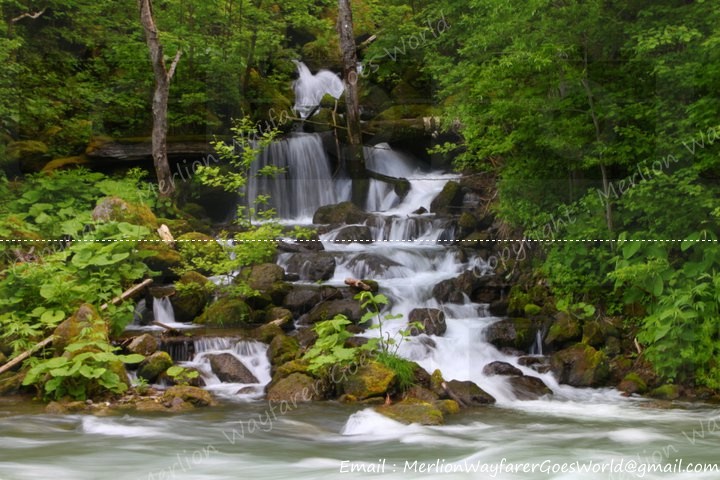
Sounkyo's Silver Streams

Bordered by 100-metre cliffs formed by the erosion of tuff, Sounkyo Gorge is situated at the foot of Mount Daisetsuzan - the "roof of Hokkaido", and stretches for 24 kilometres along the Ishikari River...

Jiuzhaigou - Shuzheng Valley

Jiuzhaigou (九寨沟) 
Sichuan (四川), China (中国)
March 2013
     

Shuzheng Valley (树正沟)

 
The Shuzheng Valley (树正沟) is the main northern branch of Jiuzhaigou. It ends after 14.5km at the Y-shaped intersection of the three gullies. Going downhill from the intersection to the mouth of the valley, visitors encounter the following:


Bonsai Shoal (盆景滩)

The first stop after leaving the entrance, Bonsai Shoal is 2,167m above sea-level. The sloping tiers of rock were created by mineral deposition atop mud-flow deposits. The "bonsai" - the Japanese word for miniature tree - of willow, cypress, poplar, pine and rhododendron cluster on the edges of the shoal, and demonstrates the diversity of plant life growing on the water in the lime base.

The bus did not even stop here. It was just a glimpse of the browns and very little blue...

Reed Lake (熊猫海)

The next spot on the Y-shaped route of Jiuzhaigou, Reed Lake (芦苇海) is a 1375 m-long, reed-covered marsh 2,140m above the sea level with a clear turquoise brook (known as the "Jade Ribbon") zigzagging through it. In spring and summer, the blue of the water is contrasted with the brown of flourishing reeds, overflowing with vigour. In autumn and winter, golden reeds span the marsh.
   
How Reed Lake looks like from the bus - As it is between seasons, the dry reeds are pale in colour and crowd the water, nearly smothering the sliver of the blue brook...
   

Sparkling Lake (火花海)

Sparkling Lake (火花海) is located 2,187m above sea level with a length of 205m long. During wet summer months, slanting rays from the morning and evening sun reflect light creating flashes on the water which look like sparks of light. In drier months (like March-April), the water level drops to expose travertine limestone mounds akin to islands in the sea, giving it its other nickname - "Thousand Island Lake".

Don't be deceived by the clear waters. - At its deepest, the lake is all of 24m deep...

Maybe someone ran out of coins and tossed her umbrella in to make a wish...

Nuorilang Waterfall (诺日朗瀑布)

Spanning over a ridge at 320m wide and 20m tall, the Nuorilang Waterfall (诺日朗瀑布) is the widest waterfall in Jiuzhaigou. It is reportedly the widest highland waterfall in China, the widest travertine-topped waterfall in the world, and one of the symbols of Jiuzhaigou. It is so wide that even from the road, only half the waterfall was able to fit into Merlion Wayfarer's 18mm lens frame.

This is how it looks like from the road - 
The highest and widest vantage point (short of climbing up the opposite slope)...

Nuorilang means "grand and magnificent" in Tibetan, and it is truly gorgeous...

The top of the waterfall is very flat. It was said that originally, there was no waterfall here, only a flat plateau. When passing by this plateau, a monk brought along a spinning wheel and taught a Tibetan girl how to spin. On her part, she taught her sisters how to spin too.


The cruel landlord thought that she was doing something evil and kicked her and the spinning wheel over the cliff. Out of nowhere, torrents appeared, washing the cruel landlord and his accomplices down the mountain. The water continued to gush non-stop, forming today's waterfall.

Ice blocks at the base of the waterfall. Yes, Jiuzhaigou is still very cold at this time of the year...

It is said that when the sun shines in the morning, flowery rainbows can be seen in the sky, which make the waterfall more charming and splendid. Well, Merlion Wayfarer was there in the morning, but there were no sign of any rainbows. Guess the light wasn't right for the seven colours this round but...

A magical misty look caused by the slanting rays of the morning sun...

See light spheres caused by the reflection of water? Sui!

Rhinoceros Lake (犀海)

Rhinoceros Lake (犀海) is located at 2,315m above sea level with a depth of 11.7m.  With a length of 2km and a width of 195.6m, it is the second largest lake in Jiuzhaigou, after Long Lake. Formed from mud rock flows blocking the valley, within its depth lies a constant underground water supply, which keeps the volume of the lake constant.

The story goes that in olden days, a lama came here on a rhinoceros. He was seriously ill and was on the verge of death. After he drank some water from the lake, he recovered completely. He did not want to leave and dwelled by the lake forever.

Rhinoceros Lake is said to be one of the most changeable lakes in Jiuzhaigou. Every morning the inverted images of clouds and mists are of such enchanting beauty the sky cannot be distinguished from the water of the lake.


Tiger Lake (老虎海)

Tiger Lake (老虎海), located further up the Shuzheng Valley, is 2,298m above sea level. It is peaceful and tranquil like Rhinoceros Lake, a sharp contrast from the noise and splendour of the nearby Shuzheng Waterfall.

There are three sayings concerning the source of its name - One is that the sound of Shuzheng Waterfall is as loud as the roars of tigers; The second is that in late autumn, the reflections of the forests on the lake looks like the stripes of tigers; The third saying is that the tigers in the mountain were fond of this lake and used to come drink the water of the lake.


Shuzheng Waterfall (树正瀑布)

Formed by the water of Tiger Lake flowing over the steep cliff, Shuzheng Waterfall (树正瀑布) is 2,295m above sea level, 11m high and 62m wide. Due to its convex shape, the water falls down the travertine slopes over multiple levels creating an array of beautiful water landscapes. 

Shuzheng Waterfall may not have the grace and elegance of its counterparts -
Nuorilang and Pearl Shoal. But what it lacked in beauty,
it made up in the magnificence and raw power of the thundering water...

Shuzheng Waterfall was the most impressive waterfall that Merlion Wayfarer saw at Jiuzhaigou - The sheer power of the water (lots of spray!) was simply awesome!

Due to the layout of the walkway, sometimes it felt as if
the water was gushing towards Merlion Wayfarer...

Sometimes Merlion Wayfarer did not know where to aim her camera - There were too many beautiful focal points!

After the roar of the falls, there was a gully with gentle cascading flows. The silence was almost deafening. The flow was further slowed by bushes which grew on the water...

No stone was removed in the construction of the walkway - A shining example of eco-tourism...

A Tibetan-style house with a defunct water wheel lies in this quiet gully...

The Stone Mill is located 2,280 above sea level with a water wheel driven by the river water to grind barley or wheat to floor. The roof was made in the traditional method from slats.

Stones were placed on the slats to weigh them down. 
A prayer wheel lies next to the cluster of wooden sheds...


More photos are available on Merlion Wayfarer Goes World's Picasa at :
Sichuan - Jiuzhaigou (九寨沟)


Jiuzhaigou - The Private Bus Option

Jiuzhaigou (九寨沟) 
Sichuan (四川), China (中国)
March 2013

In order to protect the environment of Jiuzhaigou and prevent traffic congestion within the Jiuzhaigou Scenic Area, only designated buses are allowed within Scenic Area. These buses are operated by the natural gas to prevent pollution to the environment.

For those going with tours, accompanying tour guides and tour leaders will 费劲唇舌 (use a lot of saliva) to persuade you to take on the Private Bus option.

The Private Bus is a "green" (environmentally-friendly) bus chartered just for your group. Costing RMB 200-280 per pax, it is available for rent for the day if your guide has pre-booked earlier. For the curious ones, the Public Bus (termed "Green Bus" officially) costs RMB 80 (off-peak period) or RMB 90 (peak period).

What a Private Bus looks like...

To add to its authenticity, each seat has a special seat cover with the bus number...

Advantages of the Private Bus:
  • You don't have to squeeze with the locals when getting on and off the bus. 
  • You are guaranteed of a seat for the entire day.
  • You don't have to wait.
  • You can stop wherever you want.
  • You walk less.
  • You take photos with fewer people in the frame - Since you can choose to avoid the crowded areas when they are crowded and visit them later.
  • You can leave your Alibaba Bag on the bus with all your winter clothes and are assured that your bag is still there when you are back.
  • Most importantly, you cover double the number of locations in the same amount of time.
Disadvantage of the Private Bus:
  • Cost - A very big cost.
(For those who like to do a bit of maths on tour commissions, RMB 200 per pax for a bus of 20 is like a rental fee of S$1,000 per bus per day.)

(Source : SGMoneyCollections)

For those who come from countries where you are used to queuing orderly when getting on a bus, Merlion Wayfarer STRONGLY ENCOURAGES you to take the Private Bus option. You cannot "fight" with the locals for the bus. They will win hands down. No kidding.


To give an estimate of the congestion possible within Jiuzhaigou, here is an estimate - At the NEAREST bus park five minutes away from the exit, there are at least 50 big buses parked within. If each bus contains 30-40 passengers, there are potentially 1,500-2,000 people getting up and down the buses within a confined area during peak hours (0830-1000h in the mornings and 1700-1830h in the evenings). At the end of the day, the exhaust fumes from other buses while waiting for one's own bus can be so overpowering that coughing results. It is also extremely dangerous and chaotic (Note : No traffic lights and no traffic warden!) as the bus drivers may not be able to see pedestrians walking nearby when reversing or moving out.


This is how bad it can get during the peak months of September to October where every photo you take will have someone else's face inside...
(Source : Blogspot)


Merlion Wayfarer saw this happening at the base station:
  • A huge mass of people segregating outside BEFORE even entering the Jiuzhaigou Scenic Area...
  • Fights in toilets over queues (No photos here, the smell is already bad enough!)...
  • Huge groups gather before, and just after the entrance points, resulting in congestion obstructing the incoming flow of visitors...
  • Queues for buses snaking 3-4 S-shaped rows long...
  • Local tourists patiently queuing - Until the bus arrives and they push any and every one out of their way. Doesn't matter if you are a female, a child, or a senior citizen...
  • Local tourists climbing over fences to cut queues...
  • Park wardens screaming and nearly raising fists to control the crowd...

Tour Guide E and Tour Leader C had also shared their stories of fights happening over queues in their past experiences...
(Source : Blogspot)

Well really, the choice is yours you know - cost vs comfort/safety...
(Source : Zazzle)


More photos are available on Merlion Wayfarer Goes World's Picasa at :
Sichuan - Jiuzhaigou (九寨沟)


Away To High Places - Altitude Sickness

Maoxian (茂县) - Jiuzhaigou (九寨沟) - Dagu Glacier (达谷冰川) 
Sichuan (四川), China (中国)
March-April 2013

Merlion Wayfarer was pre-warned by her tour leader and her friends about the effect of altitude sickness. And she was certainly freaked out about it!

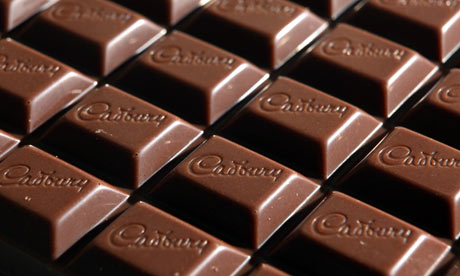
Friend K said when she was in Nepal, she could not eat anything during the entire trip and had to rely on just chocolate bars. (OK, so Merlion Wayfarer prepared herself and brought lots of Oreos and Cadburys!)
(Sources : Wikimedia & The Guardian)

Friend K also said that it was not possible to eat much meat on high altitudes as it may not be fresh due to the transportation required. And that be prepared to eat a purely vegetarian diet. (Oh no, jiak chao (吃草) like a goat?!)
(Source : Wordpress)

Tour Guide E said that one's stomach would shrink due to the altitude. This would result in digestive discomfort conditions, e.g. wind, loss of appetite...

He also proposed that tour members experiment by counting their heartbeats in Chengdu and at the higher altitude. An increase of at least 1.5 times was expected. (Oh my poor heart? No wonder Tibetans have a higher concentration of oxygenating red blood cells!)

Despite the cold weather, Tour Leader C reminded all to avoid alcohol and hot springs as these could increase one's blood pressure significantly...

Merlion Wayfarer panicked. She even went to see the doctor in search of a prescription or medication for altitude sickness.

Well, were these true?

When we reached the mountain lodgings, our bloated packets of food were showing the effects of high altitude - All bloated! Imagine the same thing happen to your stomach!
   

Merlion Wayfarer saw these conditions happen to her tour group:
  • The tour guide had pinkish cheeks much like the Tibetans despite putting on sunblock. His face also showed signs of skin aging with visible spotting despite being only in his 30s.
  • Group Member A suffered from excessive flatulence during the entire mountain trip and kept burping.
  • Group Member B experienced non-stop diarrhoea for three consecutive days.
  • Group Member C could not eat much during the entire trip.
  • Group Member D could not hear anything well even when questions were asked several times.
  • Group Member E had a very bad stabbing headache when descending from the high altitude too quickly.
  • Group Member F could not breathe properly.
  • Group Member G became absent-minded and careless.
  • Group Member H could not see clearly due to the reflection off the snow.
  • Group Member I developed more freckles after leaving the mountains.
  • Several group members also showed signs of sunburn with watch/ring bands with lighter coloured tones and peeling skin.
 
According to the locals, altitude sickness can be alleviated by:
  • Slowing down one's pace of walking
  • Avoiding running and any fast-paced or strenuous activities
  • Taking deep breaths
  • Not losing one's temper unnecessarily 
 
Well, yoga breathing did indeed help!
(Source : Wordpress)


More photos are available on Merlion Wayfarer Goes World's Picasa.


Treacherous Mountain Roads - Is Your Life Worth 100 RMB?

Maoxian (茂县) - Jiuzhaigou (九寨沟) - Dagu Glacier (达谷冰川) 
Sichuan (四川), China (中国)
March-April 2013

Merlion Wayfarer noticed a tour member on the bus giving 100 RMB to the bus driver on the last day of the tour. 100 RMB is equal to about S$20 (5 RMB = S$1). 

(Source : DrPinna.com)

Considering that the tips for a typical China trip are 25 RMB per day for both the local guide and the driver, with an additional S$2 per day for the accompanying Singapore tour leader, multiplied by a bus load of about 20 pax over a typical period 6-10 days... The amount the bus driver gets from tips alone can be quite significant.

Is it worth giving the extra amount?

A typical trip made by the tour bus consists of long hours of driving from 0800-2200 hours daily over a period of at least one week through these road conditions...
  • Snaking through traffic jams with vehicles and pedestrians that may or may not obey traffic rules and lights...
    (Traffic warden volunteers are required to better manage such traffic conditions on major roads)
  • Parking a bus next to another few without scratching any bus or knocking down any person...

  • Tunnels with no or very poor lighting...
  • Fog/Mist/Rain with low visibility and rock surfaces just inches from the bus...
  • Tunnels or roads that are under construction or repair or closed to traffic without sufficient preemptive-warning...
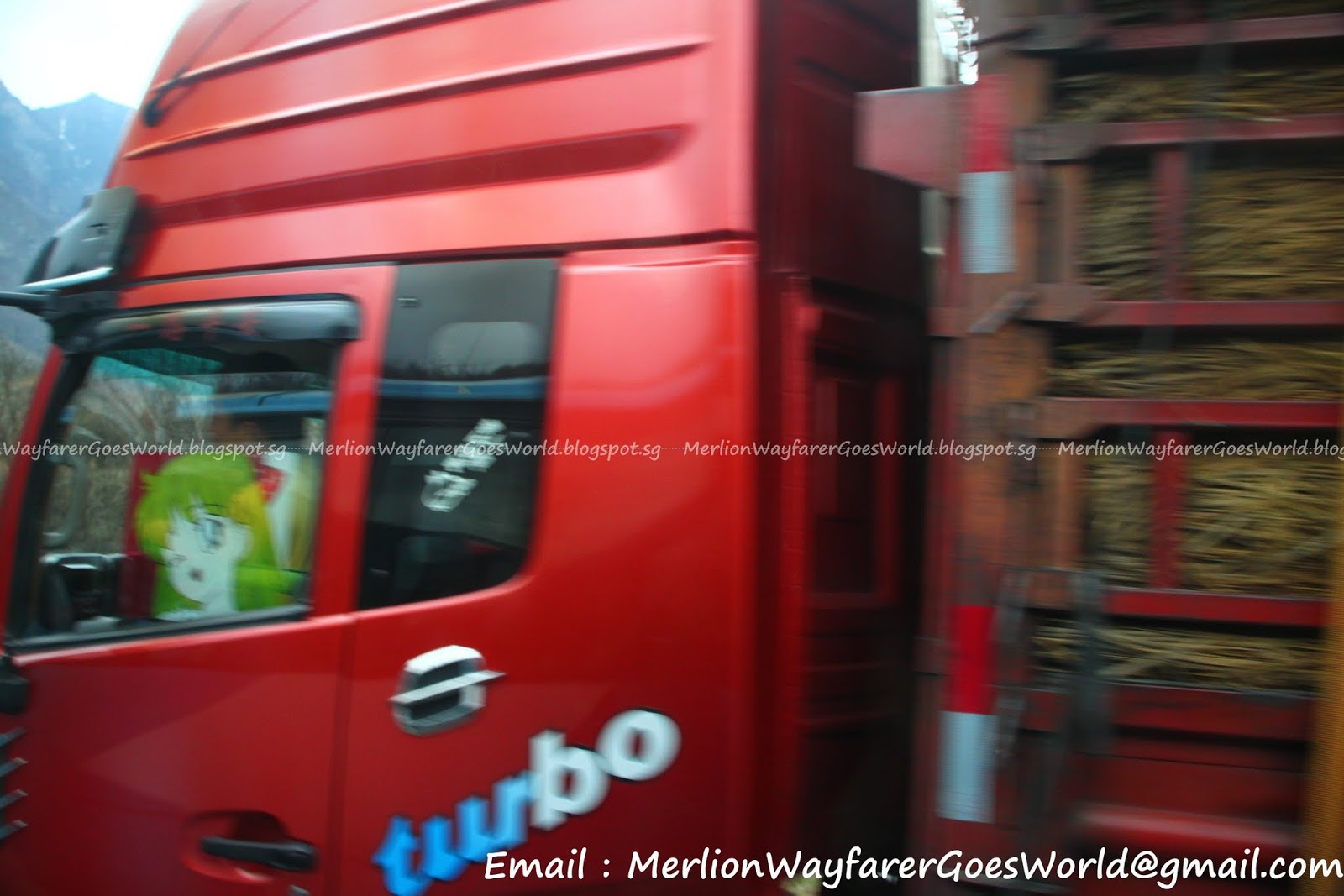
  • Fast-speeding heavy vehicles that overtake with little warning...
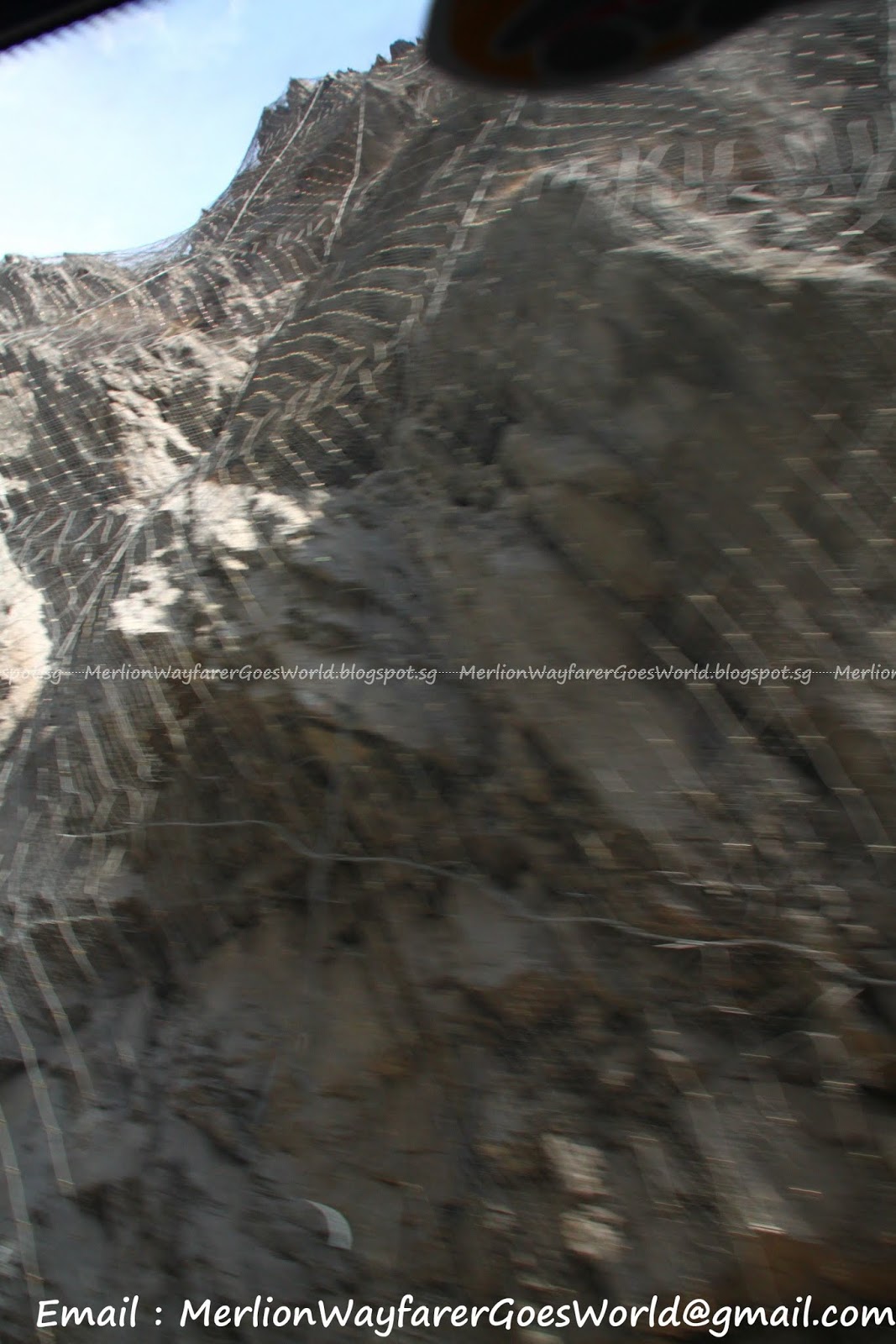
  • Mountain roads with wire meshes holding the loose stones on the cliffs together to protect vehicles travelling on the roads and a lot of evidence of landslides...
  • Signs showing the dangers on the roads - some knocked down by other drivers, some still upright to scare other drivers...
  • Not one S-curve but three! Mountain roads that Jay Chou will have difficulty speeding on in Initial D...
(See how slanting the buses are just by going around the bends?)
  • The road that the tour bus travelled on with just a hand span's width to the ravine below...
  • What lies below...
  • A section of the collapsed road directly behind the bus...


Merlion Wayfarer's conclusion:
Is your life worth just the extra S$20?

- An affirmative YES! -

With this note, Merlion Wayfarer wishes to express her thanks to the excellent driving of her bus driver which has kept her group safe throughout the duration of the tour. She also appreciates the risks that her tour guide takes to maintain a good presence by standing in front of the bus to speak to the group. May the driver's superb skills continue to ensure the safe passage of all upcoming future tours in which he participates in.


More photos are available on Merlion Wayfarer Goes World's Picasa at :
Sichuan - Roads