Bali Hai

The cotton wool clouds, the fine grains of black volcanic sands, the clean sea waters - one can just lie on the beach and while the time away with a tan beneath the balmy tropical sun...

The Volcanic Islets Of Onuma

Ōnuma Park is known for its picturesque, island dotted lakes and majestic dormant volcano, Mount Komagatake. Surrounded by birch and maple forests, a total of 128 small islands can be found in its lakes...

A Journey Over Mountains & Waters

A land of rocky mountains, snaking rivers, steep slopes, deep valleys, and harsh barren terrain. Yet in some places, lush greenery and crystal-clear azure waters abound...

The Bluest Pacific Seas

In the middle of the Pacific Oceans lies an archipelago of islands formed from the fiercest violent volcanoes and made of the browns and greys of cooled lava rocks. The resulting landscape is breathtaking in its purest greens and blues...

Sounkyo's Silver Streams

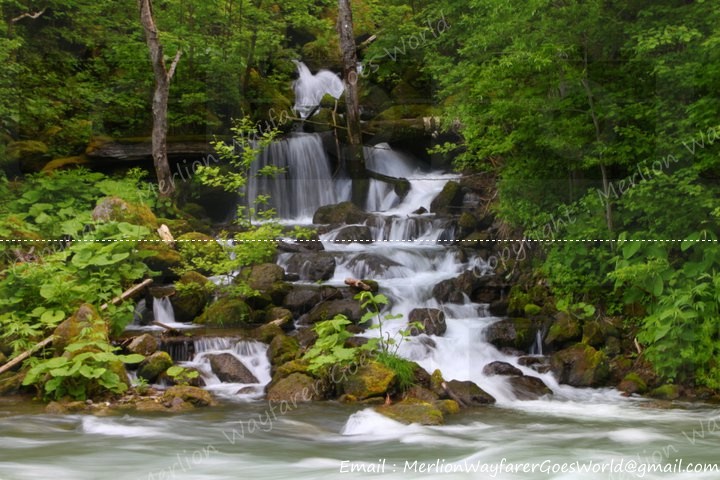
Bordered by 100-metre cliffs formed by the erosion of tuff, Sounkyo Gorge is situated at the foot of Mount Daisetsuzan - the "roof of Hokkaido", and stretches for 24 kilometres along the Ishikari River...

The Red Lanterned Gates Of Asakusa

Asakusa (浅草), Tokyo (東京)
Kanto, Honshu, Japan
Autumn 2009

Asakusa (浅草) is a part of Tokyo's downtown Taito district best known for its many temples, particularly Sensōji. Sensōji (浅草寺), also known as the Asakusa Kannon Temple, is Tokyo's largest Buddhist temple and a major attraction for Japanese and foreigners alike.

Up first is the Kaminarimon (雷門) or "Thunder Gate", featuring a much-photographed giant lantern and statues of guardian gods Raijin (god of thunder) and Fujin (god of wind). First built in 942, the gate has been destroyed numerous times and the current incarnation dates to only 1950. The Nakamise shopping arcade leading up to the temple starts after the gate. At the end of the arcade is the main gate Hōzōmon (宝蔵門), notable for a giant straw sandal (waraji) hung up on one side. This gate too is guarded by ferocious guardian gods.

The perennially busy Kannondō (観音堂, Kannon Hall) is behind the gate, with a steady stream of worshippers wafting incense over themselves and trooping up the steps to pray and donate. According to legend, the hall was originally built in 628 to house a statue of Kannon, the Goddess of Mercy, fished out of the Sumida River by two brothers. To the west is the Gojūnoto (五重塔, 5-Story Pagoda), reputedly containing some of the ashes of the Buddha.

The famed red lanterns symbolic of Asakusa...
 
Aisles filled with colourful sights and delicious smells...


An eye-catching little beauty decked out in new clothes for the 753 Children's Day festival...

A devotee offers incense at the Asakusa Kannon Temple...

An artist stands at the entrance of the temple to complete his drawings...

Delicacies are readily available at every corner to tempt visitors...
 

Flour balls that look like coloured marble...

Food is made - by hand, by tools and by machines...
 
There are ninja costumes on sale for kids too...
 

A departing shot of the Asahi Beer Tower
with its c
haracteristic Flamme d'Or as we walk towards the subway...

The full album is available at:
The Red Lanterned Gates Of Asakusa


Harajuku's Costumed Beauties

Harajuku (明治神宮/コスプレ), Tokyo (東京)
Kanto, Honshu, Japan
Autumn 2009

Cosplay (コスプレ, kosupure), short for "costume play", is type of performance art in which participants don costumes and accessories to represent a specific character or idea. Characters are often drawn from popular fiction in Japan. Favorite sources include manga, anime, tokusatsu, comic books, graphic novels, video games, hentai and fantasy movies.

The term cosplay represents a contraction of the English words costume play. The term was coined by Nov Takahashi of the Japanese studio Studio Hard while attending the 1984 Los Angeles Science Fiction Worldcon. He was impressed by the hall and the costumed fans and reported on both in Japanese science fiction magazines.

Cosplayers in Japan refer to themselves as reiya (レイヤー); pronounced "layer". Those who photograph players are called cameko, short for "Camera Kozo" or "Camera Boy". Portraying a character of the opposite sex is "crossplay" while portraying a character who dresses as the opposite sex (from the cosplayer) is called "crossdress".

Jingūbashi passes over Yamanote Line south of Harajuku Station, Tokyo, at the Meiji Shrine gate. It is a famous gathering place for cosplayers.

Cosplayers gather here every Sunday...

  Cross-dressing seems the norm here...

Street vendors join in the crowd by plying their wares...


The full album is available at:
Harajuku's Costumed Beauties


Indonesia - Bali

             
Sand Paradise
The cotton wool clouds, the fine grains of black volcanic sands, the clean sea waters - one can just lie on the beach and while the time away with a tan beneath the balmy tropical sun. In the evenings, set up a table, add some candles and bring forth a guitar play, and serenade yourself under the stars with an Elvis Presley ballad with the freshest-ever mouthwatering seafood...
                          
             
Imposing Cliffs

Pounded by the crashing waves, the overhanging cliffs have withstood the test of time. Stand on the edge and shout to listen to the echo, or just stand and be awed by the scenery before you. Such is the magnificence of the cliffs steadfast by the sea...
                          
Bali Hai's Cliffs - Tanah Lot
Tanah Lot
Bali Hai's Cliffs - Uluwatu
Uluwatu
             
Romance At Dusk

It is a time when the world changes from dark to light, when magic happens with the disappearance of light. Silhouetted against majestic cliffs and tempests of the sea, watching a sunset here beside the sea is an experience to be treasured with your loved one....
                          
Bali Hai's Sunsets - Temple In The Sea
Temple In The Sea
Bali Hai's Sunsets - Temple By The Sea
Temple By The Sea


Bali Hai's Sands

Bali, Indonesia
September 2009

Bali has a rich assortment of beaches, each of which is a favorite destination on its own. Bali beaches range from palm-fringed white sand coasts on the island’s south such as Kuta, Nusa Dua and Sanur, to the cliff-guarded hidden shores of Uluwatu, Padang Padang, Dreamland and Bingin. Beaches here comprise  of striking black sands on the north and western shorelines, with sleepy undisturbed coves within. 


Jimbaran Beach

 
Jimbaran is a fishing village and tourist resort in Bali, Indonesia. Located on Bali's southwestern coast of the narrow isthmus connecting the Bali mainland and the Bukit Peninsula, south of Ngurah Rai International Airport, Jimbaran beach and the famous Jimbaran Bay has a spread of seafood restaurants and luxury hotels lining the waterfront. The beach and the bay of Jimbaran offers small secluded areas, where the land gently slopes away from the beach revealing exclusive panoramic haunts hidden under a canopy of leafy tropical forests.

At the waterfront warung restaurants, diners select the live seafood that they wish to eat, and it is immediately prepared, generally grilled over a fire of coconut husks rather than charcoal. The extraordinarily fresh seafood, combined with the fragrance of the husks, the balmy sea breeze and the soothing sound of the waves, creates a memorable seafront dining experience.

Romantic beachside seafood dining under the stars with guitar buskers and low-level fireworks...
 

Kuta Beach


With a long broad Indian Ocean beach-front, Kuta was originally discovered by tourists as a surfing paradise. It has long been a popular stop on the classic backpacking route in South East Asia. Back in the 1980s they used to talk about the three Ks: Katmandu in Nepal, Khao San Road in Bangkok and Kuta. Today Kuta still attracts some hardcore backpackers as well as families and tourists from all over the world.

A former fishing village, Kuta was one of the first towns on Bali to see substantial tourist development, and as a beach resort remains one of Indonesia's major tourist destinations. It is known internationally for its long sandy beach, varied accommodation, many restaurants and bars, and many renowned surfers who visit from Australia.

The 5km-long sandy stretch of Kuta is arguably the best beach front in Bali. The beach is safe, partially clean, and well-maintained, although the beach vendors are frequently present to push their array of products - massages, hair braiding, cigarettes and surf boards. As you move north along the beach to first Legian and then Seminyak and Petitenget it becomes progressively quieter and less frenetic. To the south, Kuta Beach extends beyond the airport into Jimbaran.

Marbled sands at Kuta and Legian with fascinating patterns created by the strong waves...


Legian Beach


Legian is a beachfront town in South Bali, located north of Kuta and south of Seminyak. Stretching north from Kuta, Legian offers the same easy access to shops and bars but a slightly more relaxed and less chaotic feeling. It is a low-key area where you can still get the low prices of Kuta without some of the hassle. The northern area of Legian bordering Seminyak offers a bit of an escape from the crowds and is also a popular surf beach.      

Happily wagging his tail, a dog enjoys his day at the beach...

Cloud formations add to the picturesque scene afore... 
 

As the waves crash onto the sand, a lone surfer walks past...


More photos are available on Merlion Wayfarer Goes World's Picasa at :
Bali Hai's Sands

 
Sources

Bali Hai's Cliffs

Bali, Indonesia
September 2009

Tanah Lot
   

Tanah Lot is a rock formation off the Indonesian island of Bali. It is home to a pilgrimage temple, the Pura Tanah Lot (literally "Tanah Lot Temple"). Located in Tabanan, about 20 kilometres (12 miles) from Denpasar, the temple sits on a large offshore rock which has been shaped continuously over the years by the ocean tide hitting against the solid rock.


Uluwatu
    

Uluwatu,  the famous cliff-hanging temple, sits on the Bukit Peninsula.  Lying on the southernmost point of Bali, Indonesia, The Bukit (as it is commonly referred to) is a large limestone peninsula which, bar a sliver of land just south of the airport, would be a separate island.


More photos are available on Merlion Wayfarer Goes World's Picasa at :
Bali Hai's Cliffs


 Sources


          Bali Hai's Sunsets

          Bali, Indonesia
          September 2009


          Tanah Lot - Temple In The Sea


          Tanah Lot is a rock formation off the Indonesian island of Bali. It is home of a pilgrimage temple, the Pura Tanah Lot (literally "Tanah Lot temple"). Tanah Lot means "Land in the Sea" in Balinese language. Located in Tabanan, about 20 km from Denpasar, the temple sits on a large offshore rock which has been shaped continuously over the years by the ocean tide. The temple itself is built on a small promontory which is only accessible at low tide. During high water the rock takes on the appearance of a large boat at sea, such is its shape.


          It is claimed to be the work of the 15th century priest Nirartha. During his travels along the south coast, he saw the rock island's beautiful setting and rested there. Some fishermen saw him, and bought him gifts. Nirartha then spent the night on the little island. Later he spoke to the fishermen and told them to build a shrine on the rock as a holy place to worship the Balinese sea gods.


          The Tanah Lot temple was built and has been a part of Balinese mythology for centuries. The temple is one of seven sea temples around the Balinese coast. Each of the sea temples were established within eyesight of the next to form a chain along the south-western coast. 


          Uluwatu Temple (Pura Luhur Uluwatu) is one of Bali's nine key directional temples. Though a small temple was claimed to have existed beforehand, the structure was significantly expanded by a Javanese sage, Empu Kuturan, in the 11th Century. Another sage from East Java, Dang Hyang Nirartha, has been credited for constructing the padmasana shrines and is claimed to have attained Moksha here. Even more remarkable than the temple itself is its location, perched on a steep cliff 70 metres above the roaring Indian ocean waves. There are more steep headlands on either side and sunsets over Uluwatu are a sight to behold.


          Although the long-tailed macaques can be notorious for their aggressiveness, they are fascinating photography subjects when juxtaposed with the majestic cliffs and the spellbinding sunsets....

             
          Officially known as Pura Luhur Uluwatu ("Luhur" means "something of divine origin" while "Uluwatu" can be broken into "ulu" which means "land's end" and "watu" means "rock" in the old language). Pura Luhur Uluwatu is regarded as one of the six most important temples in Bali. Its location on the south westernmost precinct of this magical island guards the Balinese from the evil spirits of the ocean.

          Just minutes before it sets, the sun hides behind some cumulus clouds, 
          casting a soft glow over the inward-rolling waves...


          More photos are available on Merlion Wayfarer Goes World's Picasa at :

          Bali Hai's Sunsets


          Sources